Live sport in the United Kingdom
Sport is the reason most people look at IPTV in the first place, and it is where honest information is hardest to find. Here is how the rights actually work where you live.

The specific problem with each competition
None of these are caused by your provider. They are terms in rights agreements, and realising which is which saves a lot of wasted troubleshooting.
Top-flight domestic football
The Saturday 3pm blackout still applies. No UK broadcaster is permitted to show those matches live, whatever you pay.
European club football
Sits with a different broadcaster from most domestic football, so following one club needs two subscriptions.
Lower-league football
Coverage is split between a league-run streaming service and the pay broadcasters.
Motorsport
Live races are almost entirely behind one paywall, with only a couple of free-to-air weekends a season.
Boxing and combat sport
Major fights are pay-per-view on top of an existing subscription, routinely £20 or more per event.
What a wide lineup genuinely helps with
- More broadcasters covering the same fixture, often from other countries with different restrictions
- The away side's regional feed, which is frequently unrestricted where you are
- Competitions that domestic broadcasters skip entirely
- Pay-per-view events that would otherwise be charged for individually
Sport is the reason most households look at alternatives in the first place. Everything else on television has been quietly absorbed by on-demand services; live sport is the one thing that still requires a specific subscription at a specific moment, and it is where the cost and the frustration concentrate.
Why following one team now takes several subscriptions
Broadcast rights used to be sold as a block to one or two buyers. They are now split deliberately — by competition, by match window, by round, and increasingly by individual fixture — because splitting them raises more money. That is rational for the rights holder and expensive for the viewer, because the person who wants to watch one team across one season is the person who has to buy every package the split created.
| How rights get split | What it means for a viewer |
|---|---|
| By competition | Domestic league and European or cup matches on different services |
| By match window | Saturday and Sunday fixtures sold to different buyers |
| By region | The same match available to some households and blacked out for others |
| By tier | The base package excludes the sports channels, which are an add-on |
| By event | Individual fights and marquee events charged on top of a subscription |
The consequence is a specific and familiar arithmetic: two or three subscriptions, each with its own contract length and its own renewal date, to follow a single team. None of them is individually unreasonable. Together they are the reason this page exists.
The three kinds of blackout, and only one is about money
Blackouts are the most misunderstood part of sports television, partly because three unrelated mechanisms share the name.
Regional or in-market blackouts
The counterintuitive one. Matches involving your nearest team are withheld from you specifically, because local rights were sold separately from national ones. Your geography, not your subscription, decides it — which is why the team you are most likely to support is often the one you cannot watch on the national package you already pay for.
Scheduling protection
Certain time slots are closed to live broadcast entirely, to protect attendance at lower-division matches. No broadcaster is permitted to show those fixtures live at any price. This one is not a commercial decision you can pay your way around, and any service claiming otherwise for your country is misrepresenting the rules.
Tier and package exclusions
The ordinary kind: the match is available, but on a channel outside the package you bought. This is the only one of the three that is genuinely just about money, and the only one a different subscription reliably solves.
What changes, and what does not
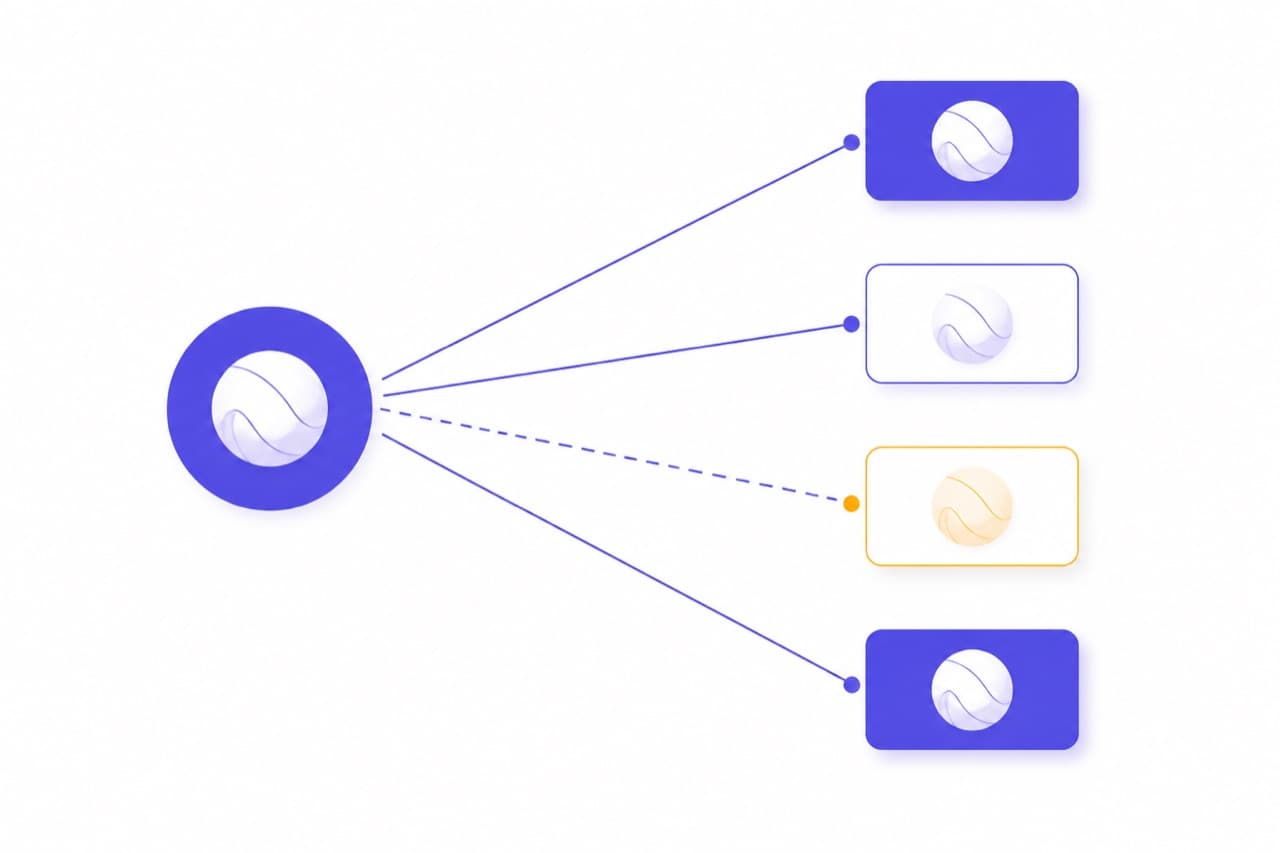
What changes is breadth. A single subscription carrying channels from many countries covers competitions that were split across several services in your own market, and it covers them without a separate contract for each. For a household following one team across a full season, that is the whole appeal.
What does not change is the underlying rights position. These are the same broadcast feeds, and the same scheduling protections apply to them. A fixture that no broadcaster may show live is not available from anywhere, and treating that as a service failure will only lead to a frustrating support conversation. Commentary language is the other thing worth setting expectations on: a match carried from another country arrives with that country's commentary, which some people prefer and others find unwatchable.
Latency, and why nobody is truly live
Every path from a stadium to a screen has a delay, and it is longer than most people expect. Satellite runs a few seconds behind the action. Cable is usually a little quicker. Any internet-delivered stream, including the official apps of major broadcasters, adds buffering on top of that and typically sits further behind again.
Two practical consequences. If you follow scores or social media on a phone while watching, you will learn about goals before you see them, and that is true on every platform rather than a fault of one. And if two people in the same house watch on different services, they will not see the same moment at the same time — which is worth knowing before it causes an argument about which one is broken.
Peak load is the real test
A big fixture is when a large share of subscribers converge on one feed simultaneously, and it is the only moment that tells you anything about a service's capacity. A provider that is flawless on a weekday afternoon and unwatchable during a major match is not a good service having a bad night; it is a service sized for average demand rather than peak.
That is why we suggest testing during a live event rather than at a convenient time. It is also why the provider evaluation guide weights peak-hour stability above every other factor. If you are shopping around, that single test is worth more than every other claim on a sales page combined.
Setting up before a match you care about
Do this the day before, not twenty minutes before kick-off. Almost every bad first experience is a setup problem discovered under time pressure.
- Find the channel and add it to favourites the day before, so you are not searching a large list while the match starts.
- Use a cable rather than wireless if the option exists. This is the single biggest improvement available for live sport.
- Check the programme guide has loaded and the times look right for your time zone. An hour's offset usually means the device clock is set manually.
- Have a second channel carrying the same fixture noted down. Feeds occasionally fail, and the fix is normally switching rather than troubleshooting.
- Close anything streaming elsewhere in the house that you do not need, so you are not competing with yourself for bandwidth or connection slots.
If the picture degrades once the match starts, the buffering diagnostic works through the causes in the order that resolves most cases quickest. The first step is always the cheapest one: play the same channel on a laptop to establish whether the problem is the device or the feed.